

✔ 100% Authentic Product
👁️ Currently Viewing 2027
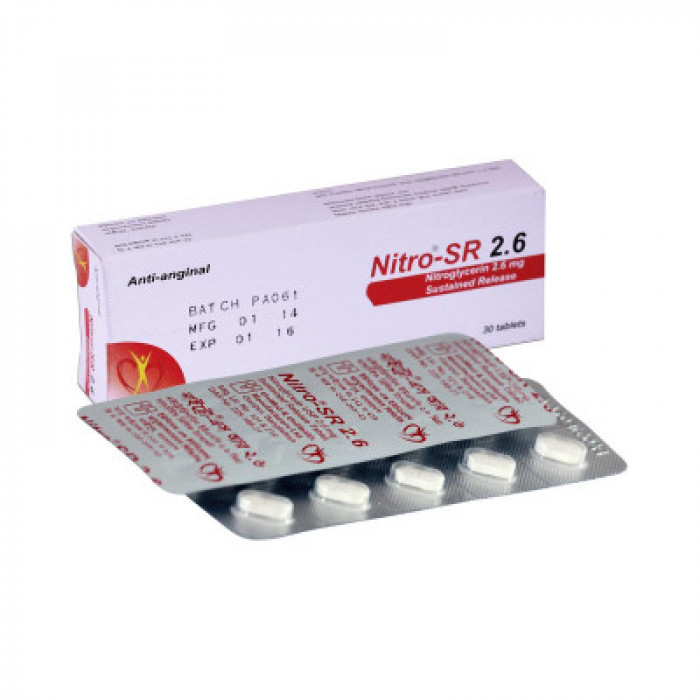
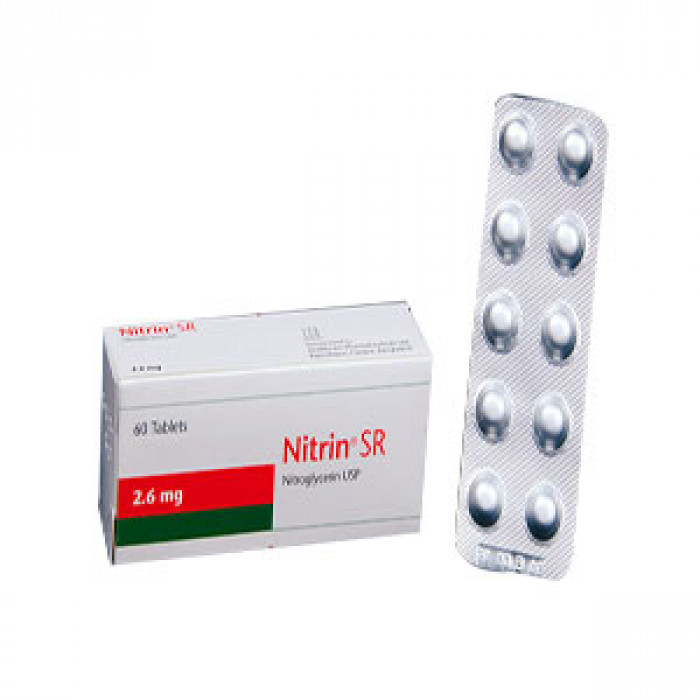
Nitro SR 2.6 Tablet, 1 Strip
Nitro SR 2.6 contains a nitrate that relaxes and widens blood vessels. This improves blood flow, reduces the heart’s workload, and lowers oxygen demand, thereby helping to prevent or relieve angina attacks.
Discount
Price: ৳ 49
MRP:
৳
50
2%
Off

100% Genuine Products, Guaranteed

Safe & Secure Payments, Always

Fast, Secure & Efficient Delivery

Proper Packaging
 Cash on Delivery - All over Bangladesh
 Regular Delivery: 24-48 Hours, Dhaka City* Charge Tk.39-59
- Regular Delivery: 48-96 Hours, Other Cities* Charge Tk.99-125
 ফ্রি ডেলিভারিঃ - ২৯৯৯ টাকা+ অর্ডারে, ঢাকা
শহরে
ফ্রি ডেলিভারিঃ - ২৯৯৯ টাকা+ অর্ডারে, ঢাকা
শহরে- ফ্রি ডেলিভারিঃ - ৫৯৯৯ টাকা+ অর্ডারে, ঢাকার
বাহিরে
📲 মোবাইল অ্যাপ অর্ডারে সাশ্রয় বেশী
-
Google Play Store থেকে ডাউনলোড
-
Apple Store থেকে ডাউনলোড
100% Genuine Products, Guaranteed
Safe & Secure Payments, Always
Fast, Secure & Efficient Delivery
Proper Packaging
- Cash on Delivery - All over Bangladesh
- Regular Delivery: 24-48 Hours, Dhaka City* Charge Tk.39-59
- Regular Delivery: 48-96 Hours, Other Cities* Charge Tk.99-125
- ফ্রি ডেলিভারিঃ - ২৯৯৯ টাকা+ অর্ডারে, ঢাকা
শহরে
- ফ্রি ডেলিভারিঃ - ৫৯৯৯ টাকা+ অর্ডারে, ঢাকার
বাহিরে
- Google Play Store থেকে ডাউনলোড
- Apple Store থেকে ডাউনলোড
📲 মোবাইল অ্যাপ অর্ডারে সাশ্রয় বেশী
✅ Description:
Nitro SR 2.6 is used primarily for the prevention and management of angina pectoris (heart-related chest pain). It may also be used in conditions such as acute myocardial infarction, severe hypertension, and pulmonary edema, under medical supervision.
- Take the medicine exactly as prescribed by your doctor.
- Swallow the tablet whole with water; do not chew, crush, or break it.
- It can be taken with or without food, but taking it at the same time every day is recommended for the best results.
If you forget to take a dose, take it as soon as you remember.
If it is nearly time for your next dose, skip the missed dose and continue with your regular schedule. Do not take a double dose to make up for the missed one.
Safety Advices
Alcohol
UNSAFE
Avoid consumption of alcohol during the management with Nitro SR 2.6 as it may increase some effects of the medicine.

Pregnancy
CONSULT YOUR DOCTOR
Nitro SR 2.6 should be used with caution in pregnant women. Consult your doctor before taking Nitro SR 2.6

Breastfeeding
CONSULT YOUR DOCTOR
Nitro SR 2.6 should be used with caution in breastfeeding women. Consult your doctor before taking Nitro SR 2.6

Driving
UNSAFE
Do not drive or operate any machines if you feel dizzy after taking Nitro SR 2.6 .

Kidney
CAUTION
Nitro SR 2.6 should be taken with caution in patients with severe kidney disease. Consult your doctor before taking it.
Liver
CAUTION
Nitro SR 2.6 should be used with caution in patients with severe liver disease. Consult your doctor before taking it.

Relevant Products / প্রাসঙ্গিক পণ্য
✔️ Possible Side Effects | Nitro SR 2.6
- Headache
- Dizziness or lightheadedness
- Blurred vision
- Low blood pressure
- Increased heart rate
- Tingling or pricking sensation (paresthesia)
Most side effects are mild and improve as your body adjusts to the medicine. Inform your doctor if symptoms persist or worsen.
✔️ Words of Advice:
- Nitro SR 2.6 may cause dizziness; avoid driving or operating machinery until you know how it affects you.
- Avoid alcohol, as it can increase dizziness and the risk of low blood pressure.
- Headaches are common at the start of treatment and usually subside with continued use.
- Long-term use may lead to tolerance; follow your doctor’s dosing schedule carefully.
- Do not use erectile dysfunction medicines (such as sildenafil or tadalafil) while taking Nitro SR 2.6, as this may cause a dangerous drop in blood pressure.
✔️ Dosage & Administration | Nitro SR 2.6
Adult Dosage (Summary)
Sustained-release tablets/capsules (Stable Angina):
2.6–6.4 mg, 3–4 times daily; dose adjusted according to response
Maximum: 26 mg, 4 times daily
Sublingual tablets (Acute Angina Relief):
0.5 mg under the tongue every 5 minutes, up to 3 doses
Sublingual spray:
1–2 sprays as needed; may repeat every 3–5 minutes (maximum 3 sprays in 15 minutes)
Intravenous use (hospital setting):
Dosage adjusted based on clinical response and condition
Use in Kidney Disease
Creatinine clearance 10–50 mL/min: Dose may be given every 24–72 hours
Creatinine clearance <10 mL/min: Dose interval may be extended to every 72–96 hours
✔️ Nitro SR (glyceryl trinitrate) is contraindicated in patients with:
- Known hypersensitivity to nitrates or any component of the formulation
- Severe hypotension
- Acute or chronic heart failure
- Marked anemia
- Hypertrophic obstructive cardiomyopathy
- Cerebral hemorrhage or recent head injury
- Low cardiac output due to hypovolemia
- Inferior myocardial infarction with right ventricular involvement
- Raised intracranial pressure
- Concomitant use of phosphodiesterase type-5 inhibitors (e.g., sildenafil, tadalafil)
✔️ Use During Lactation
It is not known whether glyceryl trinitrate passes into breast milk. Use during breastfeeding should be approached with caution and only if clearly needed.
✔️ Use Nitro SR with caution in patients with:
- Severe hepatic or renal impairment
- Hypothyroidism
- Malnutrition or hypothermia
- Cerebrovascular disease
- Chronic lung disease or cor pulmonale
- Pregnancy and lactation
- Glaucoma
- Mitral valve prolapse
- Cardiac tamponade
- History of syncope
Patients receiving high-dose or prolonged infusions should have the medicine withdrawn gradually to avoid rebound effects. Excessive or prolonged hypotension should be avoided.
To reduce the risk of nitrate tolerance, a nitrate-free interval is recommended during continuous therapy.
✔️ Drug Interactions
May increase the bioavailability of dihydroergotamine
Intravenous glyceryl trinitrate may prolong pancuronium-induced neuromuscular blockade
May reduce the effectiveness of heparin, alteplase, and noradrenaline when used concurrently
Drugs that cause dry mouth may reduce the effectiveness of buccal and sublingual nitrate preparations
Aspirin and other NSAIDs may decrease the therapeutic response to glyceryl trinitrate
Potentially Serious Interactions
Severe orthostatic hypotension may occur when used with:
- Calcium channel blockers
- Antihypertensive agents
- Phenothiazines
- Tricyclic antidepressants (TCAs)
Alcohol may cause profound hypotension, dizziness, or collapse and should be avoided
✔️ Storage:
Store in a cool and dry place away from sunlight. • Keep out of sight and reach of children.
⚠️Disclaimer:
At ePharma, we’re committed to providing accurate and accessible health information. However, all content is intended for informational purposes only and should not replace medical advice from a qualified physician. Please consult your healthcare provider for personalized guidance. We aim to support, not substitute, the doctor-patient relationship.